
26.103 - The Visibility Myth
Core Question
Why do we equate visibility with value?
✨👁️🗨️⚖️
The Work That Matters Most Is Often the Work You Do Not See
In most environments, people instinctively associate what is visible with what is important. The person speaking most often appears central to the conversation. The individual presenting appears responsible for the outcome. The work that circulates widely appears impactful. Visibility becomes a kind of shorthand for significance. It offers immediate evidence that something exists, that it is active, and that it deserves attention.
This instinct is understandable. Human perception favors what can be observed. What is visible is easier to process, easier to remember, and easier to evaluate. It leaves a trace that can be referenced. It can be discussed, measured, and responded to. In contrast, much of what actually sustains systems operates outside of direct observation. Preparation, anticipation, coordination, and quiet correction often occur before anything becomes visible at all.
Consider a simple but common experience. A meeting proceeds smoothly. The agenda is clear, the participants are aligned, and decisions are reached without confusion. From the outside, the meeting appears efficient and unremarkable. What is not immediately visible is the work that made that efficiency possible. Someone clarified expectations beforehand. Someone refined the materials to remove ambiguity. Someone anticipated potential misunderstandings and resolved them in advance. The result is a meeting that requires little visible intervention.
Now consider the opposite case. A meeting is disorganized. Participants interrupt one another, clarification is needed repeatedly, and decisions are delayed. The activity becomes visible. There is more speaking, more reacting, and more apparent effort. From the outside, the meeting may even appear more dynamic. It generates more observable signals.
The paradox is straightforward. The better the preparation, the less there is to see. The worse the preparation, the more visible the activity becomes.
Without deliberate awareness, the mind begins to favor what it can observe. Visibility becomes a proxy for contribution, not because it is accurate, but because it is available. Over time, this creates a subtle but consequential shift. Effort begins to orient toward what can be seen rather than what is needed. The question moves, often unconsciously, from “What will improve this situation?” to “What will be recognized here?” This shift does not happen all at once. It accumulates through repeated exposure to environments where attention functions as a reward.
The result is not deception. It is misalignment between appearance and effect.
Systems That Measure Attention Gradually Redefine Value
The modern environment intensifies this misalignment by organizing around attention as a primary signal of importance. In digital systems, visibility is quantified through views, reactions, and engagement. In professional settings, articulation and presence are often more legible than preparation and foresight. In social environments, expression tends to carry more weight than stability. Across contexts, what can be observed becomes easier to evaluate, and what is easier to evaluate becomes easier to reward.
This produces a consistent reinforcement loop. Attention signals importance. Importance attracts more attention. Over time, visibility becomes self-validating. What is seen appears to matter because it is seen, and it continues to be seen because it is assumed to matter.
This loop does not require explicit instruction. Individuals learn it through participation. They notice which actions receive acknowledgment and which do not. They observe which contributions are discussed and which remain unmentioned. Gradually, behavior adapts. Effort begins to favor what produces visible signals.
This adaptation can be observed across domains. In workplaces, individuals may prioritize tasks that can be demonstrated over tasks that prevent problems before they arise. In teams, communication may expand while clarity does not improve. In relationships, visible expressions of care may overshadow quieter forms of consistency and reliability. In households, coordination work remains largely invisible until it fails, at which point it becomes visible as disruption.
The consequence is structural. Systems begin to depend on forms of work that they do not adequately recognize. The individuals performing that work may feel unseen, not because their contribution lacks value, but because it lacks visibility. At the same time, roles that generate visible activity may appear more central than they actually are.
This creates an environment in which attention becomes the dominant currency, even when it is an imperfect measure of contribution. What can be seen becomes what counts, and what counts begins to shape behavior.
Why Social Validation and Measurable Attention Distort Perception of Value
Human cognition is highly responsive to social information. When individuals are uncertain about what matters, they look to the behavior and reactions of others for guidance. This process, often referred to as social proof, allows people to infer importance quickly. If many others are attending to something, it is likely to be relevant. This heuristic is efficient, but it is not always accurate.
In contemporary environments, this process is amplified by the quantification of attention. Social platforms convert visibility into measurable signals such as likes, shares, and comments. What was once implicit becomes explicit. Attention is no longer simply perceived; it is counted and displayed. This transformation alters how individuals evaluate both their own actions and the actions of others.
Research by Mitch Prinstein and colleagues at the University of North Carolina demonstrates how these environments increase feedback-seeking behavior. Individuals begin to monitor external responses to their actions more closely, using those responses as a basis for self-evaluation. Over time, this reliance on external feedback can reshape internal standards. The question of whether an action was useful or meaningful becomes intertwined with whether it was noticed or acknowledged.
This shift interacts directly with self-determination theory, developed by Edward Deci and Richard Ryan. Their research shows that intrinsic motivation is sustained by autonomy, competence, and internal endorsement of one’s actions. When external rewards such as recognition and approval become dominant, intrinsic motivation can weaken. Activities that were once meaningful in themselves begin to depend on external confirmation. The internal experience of contribution becomes contingent on external validation.
At the same time, systems tend to reward what they can measure. Visibility is measurable. Contribution, particularly when it involves prevention, coordination, or stabilization, is often more difficult to quantify. This introduces a second distortion. Individuals begin to organize their behavior around what is legible rather than what is effective. Tasks that produce observable output are prioritized, while tasks that reduce future problems without generating immediate signals may be undervalued.
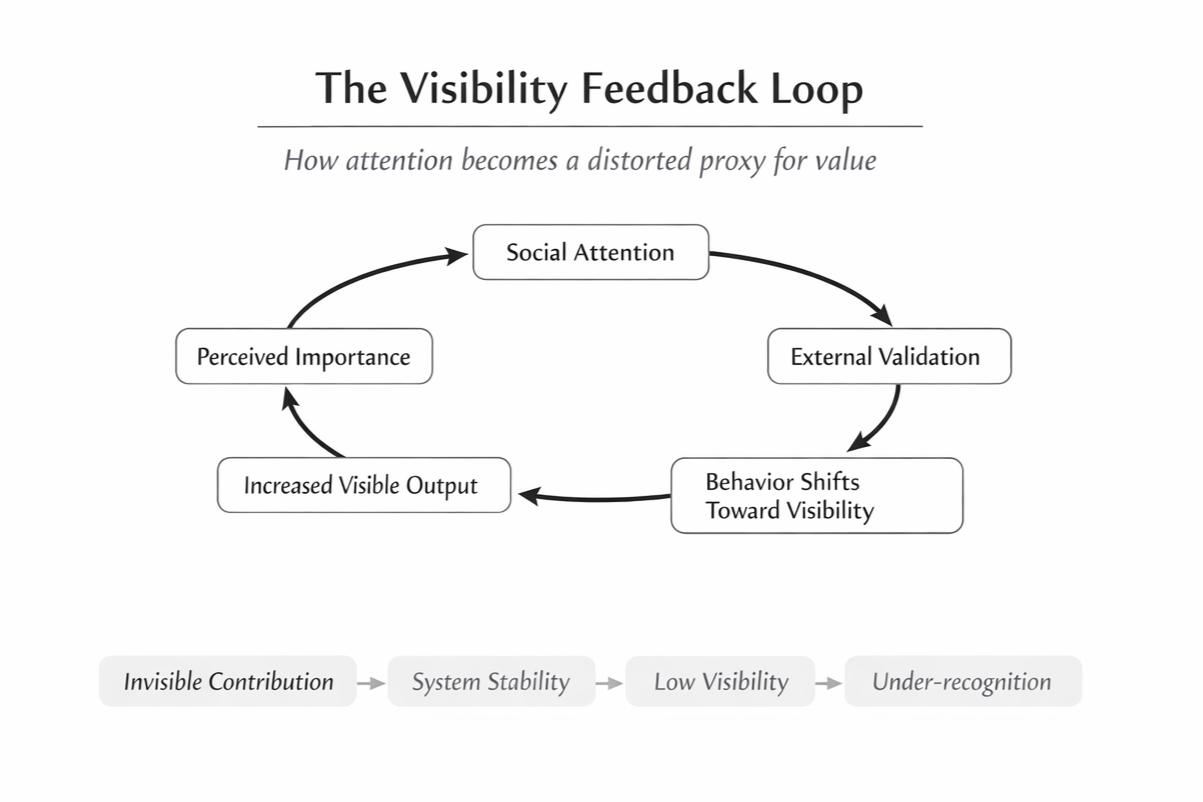
Figure 26.103.02 - The Visibility Feedback Loop
This dynamic is further reinforced by what is commonly described as metric distortion. When a measure becomes a target, behavior shifts toward optimizing that measure rather than the underlying objective. If visibility metrics are rewarded, individuals will naturally increase behaviors that generate visibility. Communication may expand, signaling may increase, and effort may be directed toward producing observable activity, even when that activity does not correspond to meaningful improvement.
Sociological research on invisible labor provides an additional layer of understanding. Studies by Allison Daminger and others have shown that essential forms of work, particularly cognitive coordination and emotional regulation, often remain unrecognized because they are difficult to observe. These forms of labor play a critical role in maintaining system stability, yet they are not easily captured by formal evaluation structures. As a result, there is a persistent gap between contribution and recognition.
Taken together, these findings describe a coherent mechanism. Humans rely on social cues to infer value. Modern systems make those cues visible and measurable. Measurable attention becomes a proxy for importance. External validation begins to shape internal standards. Behavior adapts to produce visible signals. Invisible but essential contributions become undervalued.
The visibility myth emerges not from a single error in judgment, but from the interaction of these forces.
Visibility Reflects Attention, Contribution Reflects Change
Visibility indicates what is being observed. Contribution indicates what has been altered.
These are not equivalent.
An action can generate attention without producing meaningful change. A different action can produce meaningful change without generating attention. When these are treated as interchangeable, evaluation becomes unreliable. Attention begins to stand in for impact, and the distinction between appearance and effect is lost.
A more precise approach requires a shift in evaluation. Instead of asking whether something was seen, it becomes necessary to ask what changed as a result of it. Did the action reduce confusion? Did it improve clarity? Did it strengthen a relationship or increase someone’s capacity? Did it prevent a problem from occurring? Did it make future work easier or more effective?
These outcomes often do not produce immediate signals. Preventative work, in particular, reduces the need for visible correction. When it succeeds, there is less to observe. Stability replaces reaction. Absence of disruption becomes the evidence of contribution.
This creates an asymmetry that is easy to overlook. The more effective certain forms of contribution become, the less visible they appear. Their success is expressed through what does not happen. They do not generate attention because they eliminate the conditions that would have required it.
Understanding this distinction restores proportion. It allows visibility to be understood as a surface condition rather than a reliable measure of value. It also stabilizes internal evaluation. Contribution can be recognized for what it is, even when it is not mirrored back through attention or acknowledgment.
Contribute in a Way That Improves Reality Without Requiring Recognition
To recalibrate the relationship between visibility and value, it is useful to engage in a deliberate practice that separates contribution from recognition.
Identify one specific action that will improve a situation for another person or for a system you are part of. The action should be concrete and limited in scope. It might involve clarifying a piece of information that would otherwise cause confusion, organizing something that will reduce friction, addressing a small issue before it becomes larger, or offering support in a way that strengthens someone else’s capacity.
Complete the action without announcing it.
Do not refer to it indirectly. Do not leave signals that identify you as the source. Allow the contribution to exist without attachment to recognition.
As you perform the action, pay attention to your internal responses. Notice whether there is an impulse to make the contribution visible. Observe whether the absence of acknowledgment affects how you perceive the value of what you have done. Consider whether the act feels complete in itself or whether it feels unfinished without confirmation.
After the action is complete, continue the observation. Does the improvement remain meaningful to you even if no one comments on it? Does the absence of visibility diminish the sense of contribution, or does the contribution retain its significance independently of recognition?
This practice is not intended to eliminate the role of acknowledgment in human interaction. Recognition can be valuable and appropriate. The purpose of the exercise is to examine the degree to which perceived value has become dependent on visibility.
A few guardrails are important. The action should not create imbalance or resentment. The absence of acknowledgment should not be framed as a form of moral superiority. The contribution should not be revealed later as a delayed signal. The improvement should be tangible, even if it is small.
The practice is complete when the contribution remains unannounced and its value is not reduced internally because of that silence.
Contribution Remains Real Even When It Is Not Observed
Visibility serves a function. It helps coordinate effort, communicate information, and extend the reach of ideas. It provides feedback that can be useful in many contexts. However, it is not a reliable measure of importance.
Systems are sustained by processes that often operate outside of attention. Maintenance, anticipation, preparation, and quiet correction are essential to stability. These processes do not require visibility to be effective. They require consistency, competence, and care.
Reorienting toward contribution changes how value is experienced. It reduces reliance on external confirmation and restores alignment with actual outcomes. It clarifies the difference between being seen and being useful, between recognition and effect.
There is a form of work that becomes less visible as it becomes more effective. It prevents problems rather than responding to them. It creates clarity before confusion arises. It supports others without drawing attention to itself. This work can feel invisible, particularly in environments that reward visible activity.
But invisibility does not imply insignificance.
In many cases, it indicates that the work is functioning as intended.
When internal evaluation is grounded in contribution rather than attention, value becomes more stable. It no longer fluctuates with visibility. It becomes anchored in the actual changes produced.
The relevant question becomes simpler and more precise. What became more possible because of what was done?
If something did, the contribution is real.
✨👁️🗨️⚖️
Bibliography
Deci, E. L., & Ryan, R. M. (2000). The what and why of goal pursuits: Human needs and the self determination of behavior. Psychological Inquiry, 11(4), 227–268.
Daminger, A. (2019). The cognitive dimension of household labor. American Sociological Review, 84(4), 609–633.
Manheim, D., & Garrabrant, S. (2019). Categorizing variants of Goodhart’s law. arXiv preprint arXiv:1803.04585.
Nesi, J., & Prinstein, M. J. (2015). Using social media for social comparison and feedback seeking: Gender and popularity moderate associations with depressive symptoms. Journal of Abnormal Child Psychology, 43(8), 1427–1438.
Treem, J. W., Dailey, S. L., Pierce, C. S., & Leonardi, P. M. (2016). Bringing technological frames to work: How previous experience with social media shapes the technology’s meaning in an organization. Journal of Communication, 66(2), 199–220.
Legal Disclaimer: The content published on Lucivara is provided for informational, educational, and reflective purposes only and is not intended to constitute medical, psychological, legal, or professional advice. Lucivara does not diagnose conditions, prescribe treatments, or provide therapeutic or professional services. Readers are encouraged to consult qualified professionals regarding any personal, medical, psychological, or legal concerns. Use of this content is at the reader’s own discretion and risk.
Copyright Notice: © 2026 Lucivara. All rights reserved. This content is protected by copyright laws and is intended for worldwide distribution under controlled conditions. No part of this publication may be reproduced, distributed, or transmitted in any form or by any means without prior written permission from Lucivara.
Acceptable Use: The content published on Lucivara is intended for individual, personal, and non-commercial use only. Readers may access, read, and engage with the content for their own reflective, educational, or informational purposes. Except for such ordinary human use, no portion of this content may be copied, reproduced, redistributed, republished, transmitted, stored, scraped, extracted, indexed, modified, translated, summarized, adapted, or incorporated into derivative works without prior written permission from Lucivara. This restriction expressly includes, without limitation, the use of Lucivara content for training, fine-tuning, prompting, testing, benchmarking, or operating artificial intelligence systems, machine learning models, automated agents, bots, or any other computational or data-driven systems, whether commercial or non-commercial.
By accessing or using this site, readers acknowledge and agree to Lucivara’s Terms and Conditions.
