
26.95 - Expansion vs Contraction (Systems)
Core Question
Does your work widen or narrow you?
🌱⚙️📉
April Introduction — Work That Feeds Rather Than Drains
April’s focus is contribution, but not as a surface measure of output. The deeper concern is whether the work we engage in sustains and expands our capacity to contribute over time. This requires a shift in evaluation. Instead of asking only what work produces, we must examine what it builds or diminishes within the individual producing it.
Work operates as a system. It introduces inputs, shapes internal states, and generates outputs. Within that system, directional patterns emerge. Some forms of work increase cognitive flexibility, relational capacity, and long-term contribution. Others gradually narrow attention, reduce adaptability, and constrain the individual’s range.
This distinction is often missed because both forms can produce results. A person may remain productive while becoming progressively less capable. Another may appear slower in the short term while building a broader and more durable capacity. The difference lies in direction.
This post introduces a systems-based diagnostic. It distinguishes between expansion and contraction, not as emotional states, but as observable shifts in behavior and capability. Expansion reflects increased range and responsiveness. Contraction reflects tightening, defensiveness, and reduced flexibility. The objective is not to eliminate challenge, but to understand whether the system of work is enlarging or diminishing the person within it.
[Orientation] Work Reshapes Capacity Over Time
Most people assume that work is something they do. Less often do they consider what it is quietly doing to them.
Work is not neutral. It exerts continuous influence on attention, interpretation, and behavior. The environments we operate in, the expectations we respond to, and the patterns we repeat all contribute to the formation of cognitive and relational habits. Over time, these influences accumulate and reshape capacity.
Two individuals can operate under similar conditions and produce comparable results while undergoing very different forms of internal change. One becomes more capable of holding complexity, more patient under ambiguity, and more precise in judgment. The other becomes more guarded, more reactive, and more dependent on familiar responses. The divergence is not explained by effort alone. It is explained by direction.
Expansion represents an increase in usable capacity. It is reflected in broader attention, greater flexibility, and improved integration of information. It allows individuals to remain open under pressure without becoming diffuse. It supports decision-making without requiring rigid control.
Contraction represents a reduction in range. It often develops gradually and can coexist with outward performance. The individual continues to produce results, but does so with narrowing perception, increased defensiveness, and reduced adaptability.
This distinction reframes the evaluation of work. The relevant question is not whether work is demanding, but whether the demands are enlarging or diminishing the individual’s capacity over time.
[Culture] When Output Masks Narrowing
Modern work systems frequently reward visible output while overlooking the internal cost required to sustain it. Speed is prioritized over reflection. Certainty is favored over exploration. Control is often interpreted as competence.
Within this environment, contraction can be misread as professionalism. A narrowed emotional range may appear as composure. Reduced openness may be interpreted as focus. Defensive communication may be framed as decisiveness. These interpretations persist because they are aligned with short-term performance.
The difficulty is that contraction often remains functional for a period of time. Individuals who are narrowing may continue to meet expectations, deliver results, and even advance. However, their capacity to adapt, collaborate, and respond to complexity gradually diminishes.
This creates a structural blind spot. Organizations tend to measure what is visible and immediate. They rarely measure cognitive flexibility, attentional range, or relational bandwidth. As a result, they may inadvertently reward patterns that erode these capacities.
Over time, this produces environments populated by individuals who are productive but increasingly rigid. Decision-making becomes less adaptive. Collaboration becomes more constrained. Small disruptions generate disproportionate responses. The system begins to lose its ability to evolve.
At the individual level, the cost is less visible but equally significant. A person may appear to be succeeding while their range is quietly shrinking. Without a more precise diagnostic, this pattern is difficult to detect.
[Science] How Stress Narrows and Safety Expands Cognitive Range
The distinction between expansion and contraction is grounded in well-established research across neuroscience, cognitive psychology, and organizational behavior. These fields converge on a consistent finding: the conditions under which individuals operate directly influence their cognitive range and behavioral flexibility.
Executive functions, as described by Adele Diamond, include working memory, cognitive flexibility, and inhibitory control. These capacities enable individuals to hold multiple variables, shift perspectives, and regulate responses. They are essential for navigating complexity.
Under conditions of chronic stress, these functions degrade. The mechanism is both neurological and hormonal. Persistent stress reduces the efficiency of the prefrontal cortex, which supports planning, integration, and regulation. At the same time, threat-responsive systems become more dominant. This shift produces what researchers describe as attentional narrowing and cognitive rigidity.
Working memory capacity decreases, limiting the ability to hold and manipulate information. Task-switching becomes less efficient, increasing the cost of interruption and reducing depth of thought. Inhibitory control weakens, making reactive responses more likely. These changes collectively reduce range.
The concept of allostatic load, advanced through the work of Bruce McEwen, describes the cumulative physiological burden of sustained stress exposure. As this load increases, the system becomes increasingly oriented toward protection. Novelty is more likely to be interpreted as risk. Ambiguity becomes more difficult to tolerate. Exploration gives way to control.
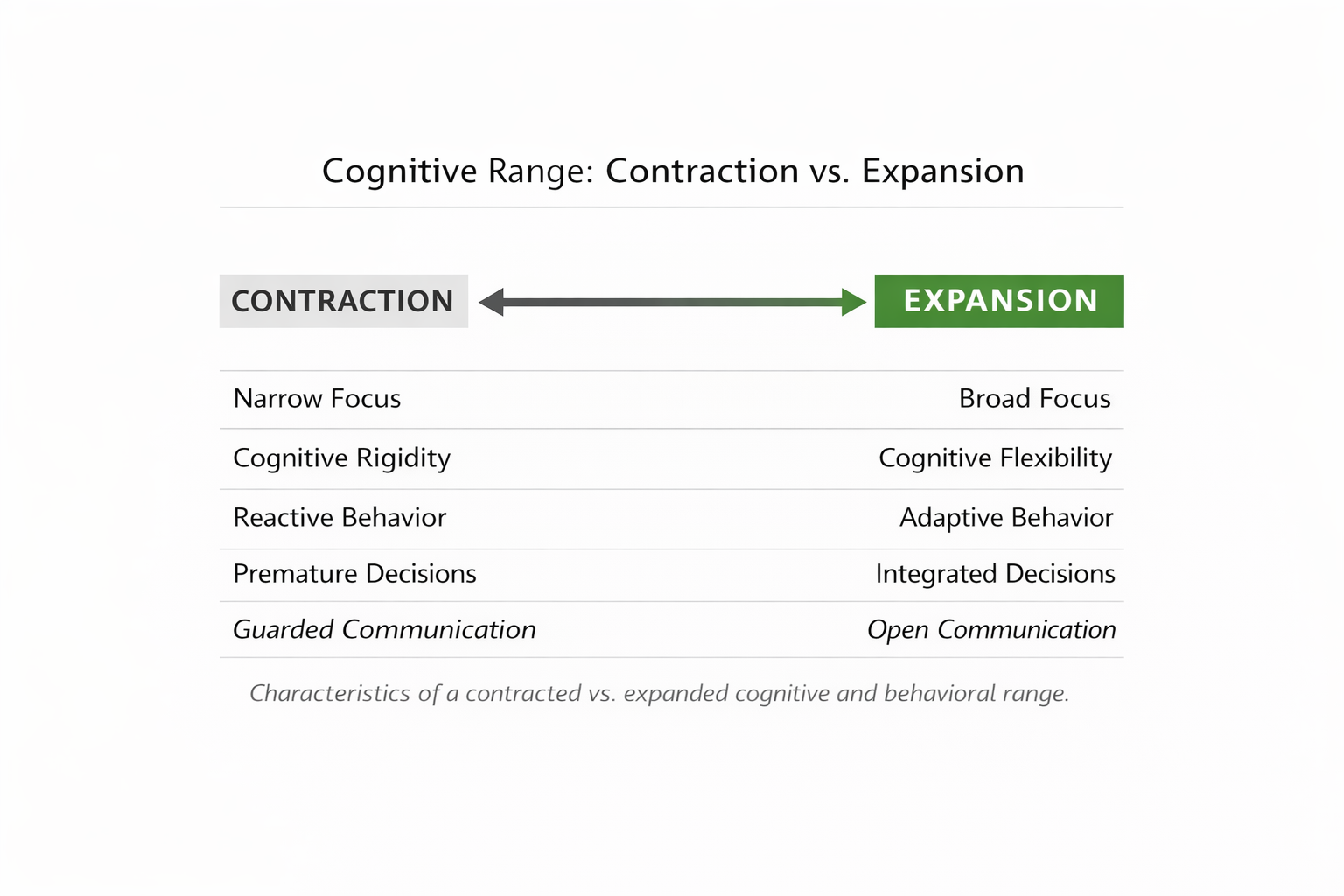
Figure 1: Cognitive Contraction vs Expansion
Research by Daniel Kahneman and Amos Tversky further illustrates how pressure influences judgment. Under stress, individuals rely more heavily on heuristics. While efficient, these shortcuts reduce the consideration of alternatives and increase susceptibility to bias.
Organizational research reinforces these findings. Amy Edmondson demonstrates that environments characterized by psychological safety support learning and adaptability. When individuals are not preoccupied with threat, they are more likely to engage, experiment, and integrate feedback.
Self-determination theory, developed by Edward Deci and Richard Ryan, identifies autonomy, competence, and relatedness as essential conditions for sustained engagement. When these are present, individuals operate with greater flexibility and intrinsic motivation. When absent, behavior becomes more constrained and reactive.
In practical terms, this translates directly into workplace patterns. Constant interruption and reactive communication increase task-switching costs, reducing depth and clarity of thought. High-evaluation environments increase threat sensitivity, leading to reduced idea contribution and increased defensiveness. Unclear expectations increase cognitive load, narrowing attention and accelerating premature decisions.
The conclusion is consistent across domains. Chronic exposure to threat-like conditions promotes contraction by narrowing cognitive and behavioral range. Conditions that balance challenge with safety, autonomy, and clarity support expansion by preserving and enhancing capacity.
[Insight] Range, Not Output, Determines Contribution
Contribution is not a function of effort alone. It is a function of the range from which that effort is generated.
Work that reduces range reduces future contribution, regardless of current performance. An individual operating with diminished cognitive flexibility, reduced tolerance for ambiguity, and increased defensiveness may continue to produce results, but the scope and quality of those results will be constrained.
Expansion increases range. It allows individuals to perceive more variables, integrate more information, and respond with greater precision. It supports collaboration by increasing relational capacity and reducing defensiveness. It enhances decision-making by allowing for the consideration of multiple perspectives.
This distinction clarifies why some forms of work, while productive in the short term, are unsustainable in the long term. They rely on patterns that gradually reduce the individual’s ability to operate effectively. Conversely, work that builds range may appear less efficient initially, but it increases capacity over time.
The relevant standard is not how much work is being done, but what that work is building.
[Practice] Map and Redesign Your Expansion - Contraction System
This is a diagnostic exercise. Its purpose is to identify repeatable patterns that influence whether your system expands or contracts. The exercise must be completed with specificity. If patterns remain vague, the system cannot be adjusted.
Step 1 — Define Expansion and Contraction Behaviorally
Write two lists based strictly on observable behavior.
Expansion includes:
asking more precise questions
listening without interruption
staying engaged with ambiguity
adapting when new information appears
contributing without immediate defensiveness
Contraction includes:
interrupting or shutting down dialogue
defaulting to familiar responses
forcing premature decisions
increasing control in response to uncertainty
interpreting neutral inputs as threats
Step 2 — Identify Specific Triggers
List 5–7 recent situations for each category.
For each, specify:
type of work
people involved
clarity of expectations
time pressure
communication environment
If all triggers look similar or interchangeable, the mapping is too abstract and must be refined.
Step 3 — Map the System Loop
For each trigger:
Input: What entered the system?
Internal State: What shifted in attention and interpretation?
Output: What behavior followed?
Repeat until patterns become predictable.
Step 4 — Identify Structural Levers
Select:
one contraction trigger to reduce
one expansion trigger to increase
Translate each into a structural change.
Examples:
clarify expectations before engagement
reduce exposure to reactive channels
create uninterrupted work intervals
increase collaboration with specific individuals
Step 5 — Predict Before Acting
Before entering a known trigger:
“Given this input, I will likely shift toward ______.”
“To counter this, I will deliberately ______.”
Practice Checksum — Verification Criteria
The exercise is complete only if:
you can predict your behavior in at least two contraction environments
you can identify specific inputs that trigger narrowing
you have implemented one structural change
you observe at least one instance of behavioral deviation from default
If these conditions are not met, the system has not been mapped with sufficient precision.
[Calibration] Measure Direction Through Behavior, Not Feeling
Calibration is the only way to confirm whether the system is changing.
Indicators of Expansion:
more precise questioning under pressure
increased tolerance for ambiguity
faster recovery from disruption
improved integration of feedback
broader and less reactive communication
Indicators of Contraction:
repetitive responses
premature decision closure
disproportionate reactions to minor disruptions
prioritization of control over accuracy
narrowing communication patterns
Predictive Test:
Before a demanding situation, ask:
“Will I operate with more range or less range here?”
Afterward, compare prediction to behavior. Accuracy indicates improved system awareness.
[Integration] Your Work Is Determining the Size of Your Future Contribution
Work is not only producing outcomes. It is building the system that will produce future outcomes.
If that system is expanding, your capacity to contribute will increase. You will be better equipped to navigate complexity, integrate perspectives, and support others. If that system is contracting, your capacity will decrease, even if your current performance remains stable.
The system you are reinforcing today is the one you will rely on under greater complexity tomorrow. Direction, not intensity, determines long-term capability.
This introduces a more stable standard for evaluating work. Instead of asking whether work is demanding or rewarding, the more relevant question is whether it is directional. Is it expanding your range, or reducing it?
Small patterns, repeated consistently, determine trajectory. Over time, they shape not only the quality of your work, but the quality of your contribution.
🌱⚙️📉
Bibliography
Deci, E. L., & Ryan, R. M. (2000). The “what” and “why” of goal pursuits. Psychological Inquiry, 11(4), 227–268.
Diamond, A. (2013). Executive functions. Annual Review of Psychology, 64, 135–168.
Edmondson, A. C. (1999). Psychological safety and learning behavior in work teams. Administrative Science Quarterly, 44(2), 350–383.
Kahneman, D. (2011). Thinking, fast and slow. Farrar, Straus and Giroux.
McEwen, B. S. (2007). Stress and adaptation. Physiological Reviews, 87(3), 873–904.
Monsell, S. (2003). Task switching. Trends in Cognitive Sciences, 7(3), 134–140.
Tversky, A., & Kahneman, D. (1974). Heuristics and biases. Science, 185(4157), 1124–1131.
Legal Disclaimer: The content provided on Lucivara is intended for informational and educational purposes only and does not constitute medical, psychological, legal, or professional advice. Readers should consult with qualified professionals before making decisions based on this content. Lucivara assumes no liability for actions taken based on this material.
Copyright Notice: © 2026 Lucivara. All rights reserved. This content may not be reproduced, distributed, or transmitted in any form or by any means without prior written permission from Lucivara.
Acceptable Use: The content published on Lucivara is intended for individual, personal, and non-commercial use only. Readers may access, read, and engage with the content for their own reflective, educational, or informational purposes. Except for such ordinary human use, no portion of this content may be copied, reproduced, redistributed, republished, transmitted, stored, scraped, extracted, indexed, modified, translated, summarized, adapted, or incorporated into derivative works without prior written permission from Lucivara. This restriction expressly includes, without limitation, the use of Lucivara content for training, fine-tuning, prompting, testing, benchmarking, or operating artificial intelligence systems, machine learning models, automated agents, bots, or any other computational or data-driven systems, whether commercial or non-commercial.
By accessing or using this site, readers acknowledge and agree to Lucivara’s Terms and Conditions.
