
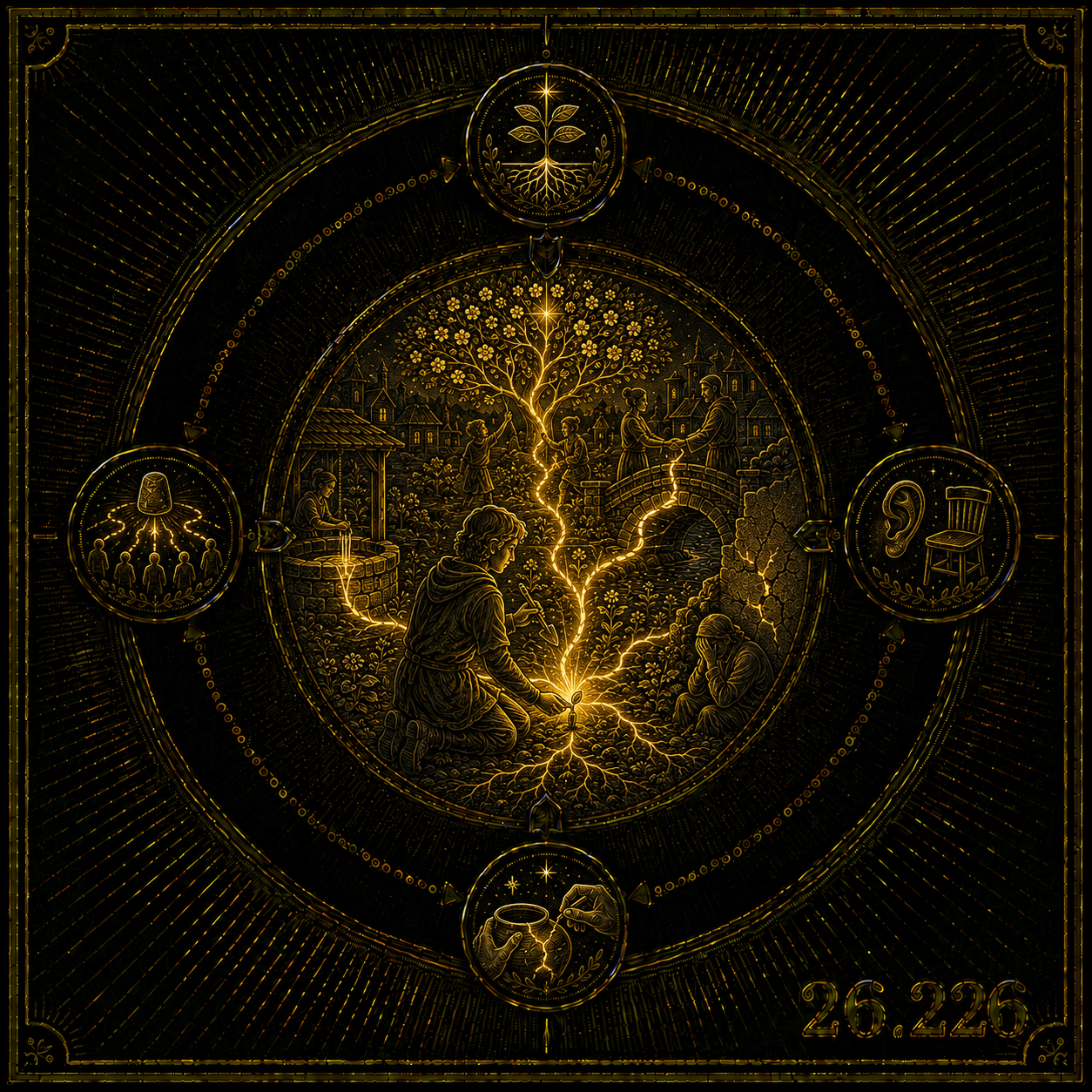
26.226 - Purpose Becomes Clearer When It Has Consequences
Purpose becomes clearer when action leaves the private world of intention and begins affecting people, relationships, resources, and systems. Consequences do not automatically validate or condemn a purpose. They reveal what responsibility now requires, asking whether we will examine impact honestly, seek missing perspectives, and correct what our actions have created.

26.201 - The Community That Can Tell the Truth About Itself
A trustworthy community is not one without conflict, but one strong enough to examine its own patterns without denial, blame, or scapegoating. This post explores how families, teams, institutions, and civic groups learn to tell the truth about themselves, turning avoidance into shared responsibility, repair, and deeper collective integrity together.

26.143 - Small Inputs
Small inputs matter because they keep systems from drifting. This post explores why modest, repeatable actions often protect capacity better than dramatic intervention. Through cultural contrast, behavioral science, and a practical seven-day exercise, readers learn how consistency preserves direction, reduces friction, and keeps care active in daily life.

26.142 - Maintenance vs Repair
Maintenance is stewardship before crisis. This post explores the difference between maintaining and fixing, showing how preventive care protects capacity before repair becomes necessary. Through cultural context, behavioral science, and a practical exercise, readers learn to identify small actions that preserve energy, stability, and continuity before decline becomes visible.

26.124 - System Feedback Loops
The body rarely communicates through isolated signals. More often, it speaks through recurring patterns, timing, thresholds, and feedback loops. This post explores how bodily signals become clearer when we stop treating them as random interruptions and begin reading them as cumulative messages from a living regulatory system shaped over time.

26.119 - Contribution as Orientation
Contribution becomes stable when it shifts from episodic effort to a consistent orientation. April reframes work through energy regulation, identity separation, recognition of invisible labor, and independence from feedback. The result is not increased output, but sustained participation that aligns effort with long-term system function and internal coherence.

26.118 - Participation in Something Larger
Most work feels small when it is seen in isolation. Meaning emerges when effort is placed within a larger system. This post examines how disconnected effort forms, why context restores clarity, and how individuals can map their contribution to regain a grounded sense of participation in something that extends beyond the task.

26.117 - Contribution as Practice
We often treat contribution as isolated moments, waiting for significance before acting. This post reframes contribution as a daily practice shaped through repetition. Drawing on behavioral science and habit formation, it shows how small, consistent actions accumulate into meaningful impact, shifting focus from scale toward sustained engagement and long-term influence.

26.109 - Preventative Work
Preventative work rarely announces itself. Systems function, crises don’t occur, and nothing appears to happen. This is not absence; it is intervention. This entry reframes avoided failure as measurable contribution, showing how disciplined foresight converts potential breakdowns into stable non-events that sustain performance, reliability, and long-term system integrity.

26.108 - Incremental Progress
Progress rarely announces itself. It accumulates beneath perception, in small, compounding increments that feel insignificant in isolation. The absence of visible milestones can mislead you into thinking nothing is happening. In reality, change is building quietly, only becoming obvious in retrospect when enough layers have formed to cross the threshold of recognition.

26.107 - Maintenance vs Achievement
Maintenance is often overlooked because it prevents failure rather than producing visible results. Yet the stability we rely on is actively sustained through repeated, disciplined effort. When maintenance is neglected, systems degrade. Recognizing this work as contribution reframes routine tasks as essential to preserving the conditions that make meaningful progress possible.

26.105 - Untracked Work
A system is only as clear as its flow. When input is compressed, transformed, and redirected under constraint, distortion becomes inevitable. This model reframes the process as controlled pressure where scattered signals converge, refine, and emerge altered, revealing how structure dictates outcome and how misalignment compounds through every stage.

26.102 - The Cost of Being Needed
Usefulness becomes limiting when it replaces participation. Systems begin to depend on the person who consistently steps in, reducing growth everywhere else. This reflection examines how over-functioning creates hidden dependency loops and offers a precise method to redistribute responsibility so capacity expands instead of concentrating.

26.95 - Expansion vs Contraction (Systems)
Expansion increases range; contraction narrows it. Systems don’t fail from lack of effort but from restricted capacity. When pressure rises, contraction feels protective but reduces contribution. The work is not to push harder, but to widen range—so the system can absorb complexity without collapsing into rigidity, defensiveness, or fragmentation under sustained demand.

26.93 - The Competence Trap
Competence can become a hidden constraint. What once created momentum begins to enforce repetition, locking you into patterns that no longer serve growth. Precision without adaptability turns strength into limitation. Progress requires recognizing when capability itself is the barrier—and deliberately choosing to step beyond what already works.

26.92 - Effort vs Friction
Effort alone does not guarantee progress. Without proper structure, energy dissipates into friction rather than converting into movement. This piece examines how identical inputs can yield radically different outcomes depending on alignment, design, and resistance, revealing why traction—not intensity—is the true driver of meaningful forward motion and sustained results.

26.85 - Reliability Is Relational Safety
Reliability is not intensity - it is consistency over time. Predictable behavior reduces uncertainty, lowers vigilance, and creates relational safety. Trust forms not from isolated actions but from stable patterns others can depend on. When your presence becomes consistent, you stop being evaluated and start being trusted without effort.

26.83 - Shared Outcomes
Shared outcomes are rarely the result of one person’s actions. They emerge through patterns of participation, reinforcement, and response. When we shift from blame to shared authorship, we gain clarity about how systems actually function. Change begins not with control, but by examining how our own participation shapes what continues.
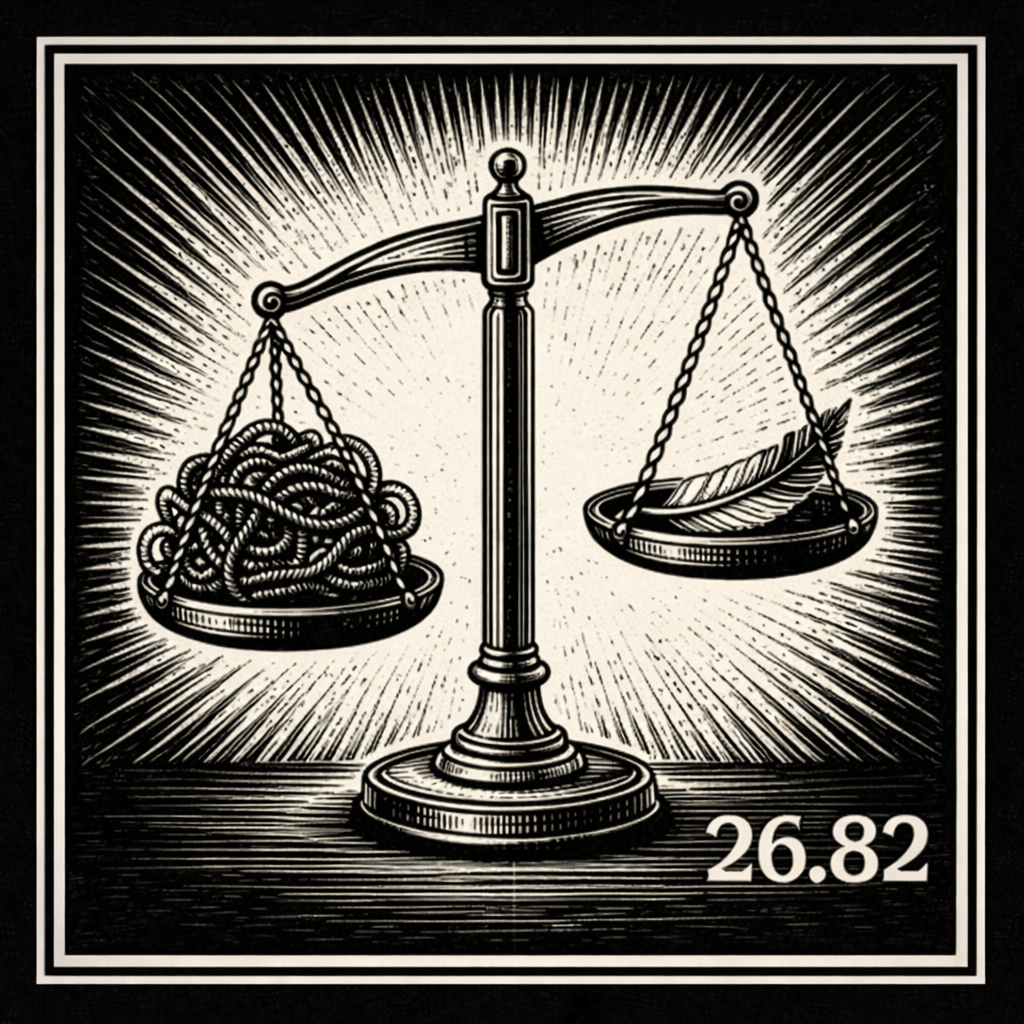
26.82 - Influence vs Control
Responsibility becomes distorted when influence is confused with control. This post examines how over-responsibility emerges, why it persists, and how boundaries restore clarity. By separating what is yours from what is not, effort becomes more effective, relationships become more stable, and energy is directed toward outcomes that can actually be shaped.
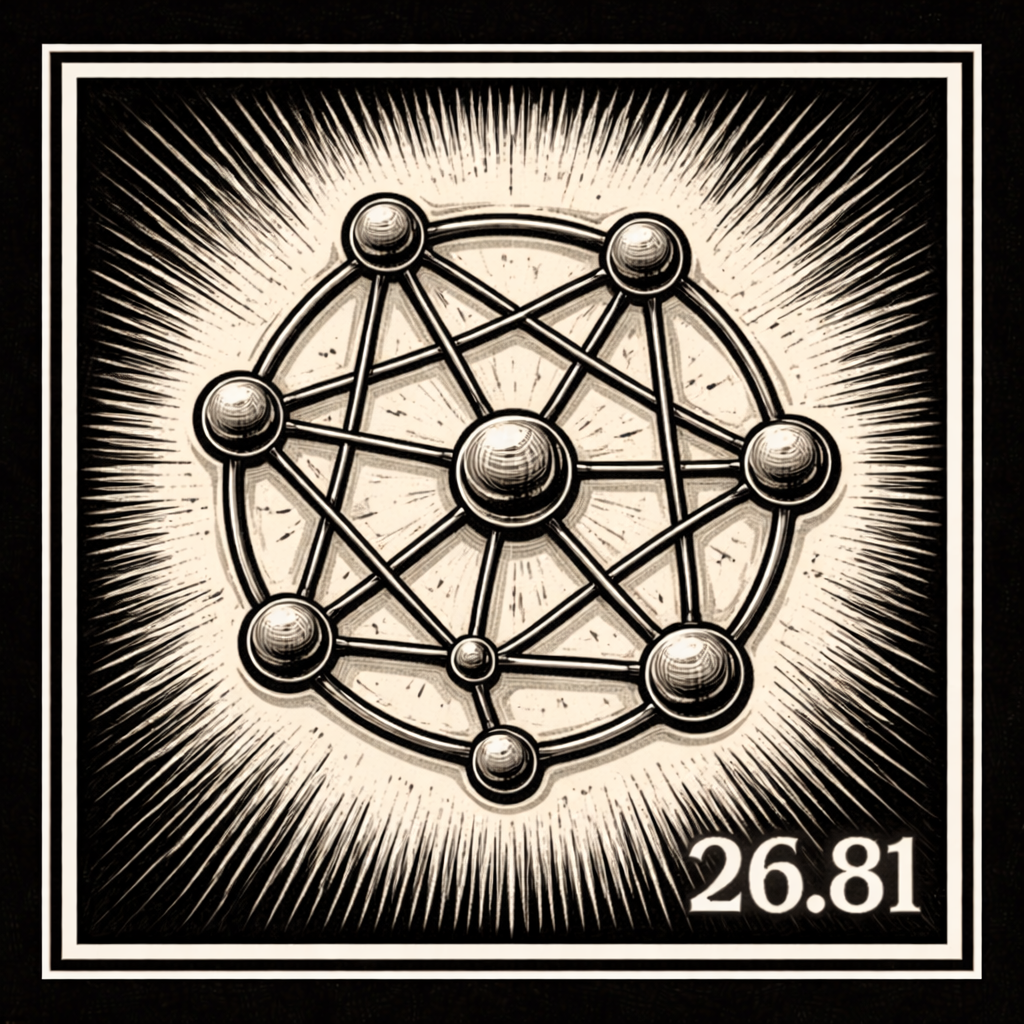
26.81 - Participation Shapes Systems
Systems are not fixed structures - they are sustained through participation. Every repeated behavior reinforces or alters feedback loops, shaping what persists over time. Influence exists wherever participation modifies patterns, even in small ways. Change emerges not from isolated action, but from consistent shifts in what is repeated across the system.
Unlock Deeper Understanding.
Elevate Your Perspective.
Join Lucivara and embark on a journey of insight, connection, and transformation. Sign up today to explore thought-provoking reflections, timeless wisdom, and practical ways to cultivate a more conscious and connected life.
Expand Your Mind – Gain deeper clarity on the Tenets of Lucivara.
Engage with Meaning – Access exclusive content designed to challenge and inspire.
Be Part of Something Bigger – Connect with a community of seekers and thinkers.
Your journey toward greater wisdom starts now.
🔹 Sign Up for Lucivara Today 🔹