

26.161 - Depth Requires Refusal
Refusal is not hostility. It is the structure that protects a meaningful yes from being weakened by every request that arrives. This post explores how over-availability, people-pleasing, and unclear boundaries fragment depth—and how one clear, non-dramatic no can restore honesty, steadiness, and presence.

26.160 - The Maturity of Choosing Less
Choosing less is not withdrawal. It is a mature way of protecting what matters from being crowded by every other good thing. This post explores how overextension thins commitment, why capacity deserves respect, and how reducing one claim can strengthen the life already asking for deeper care.

26.159 - A Life Too Full to Receive Itself
A crowded life can look full while feeling strangely thin. This post explores how busyness, overcommitment, and unexamined yeses can fragment presence. Depth requires space: not emptiness, but room to receive the life already here with attention, coherence, and enough margin for meaning to gather.

26.158 - The Difference Between Delay and Discernment
Discernment and delay can look almost identical from the outside. This post explores the difference between waiting for truth to form and using slowness to avoid responsibility. Wise pace does not eliminate action; it prepares action to become more honest, more grounded, and more aligned with what is already known.

26.157 - Slower Is Where Meaning Reappears
Meaning does not always disappear because life is empty. Often, it disappears because attention moves too quickly to receive what is already present. This post explores how slower attention restores texture, memory, and emotional significance, helping ordinary experiences become more specific, more inhabitable, and more deeply felt.

26.156 - The Clarity Hidden Inside a Pause
A pause creates space between stimulus and identity. Before the reply, purchase, apology, defense, or commitment, there is a brief interval where reaction can be noticed before it becomes behavior. That small delay is not indecision. It is the architecture of a more honest and conscious response.

26.155 - When Your Nervous System Needs a Slower Clock
When the calendar moves faster than the body can sustain, the nervous system begins to tell the truth first. This post explores bodily pacing, stress physiology, recovery, sleep, and discernment, inviting readers to track the pace their body actually trusts before exhaustion becomes the only signal left.

26.153 - Slowness Is Not the Opposite of Progress
Speed can feel like proof that life is moving forward, but motion only becomes progress when it remains connected to direction. This post examines how busyness, fragmented attention, and performance pressure can conceal drift, while deliberate slowness can restore clarity, alignment, and the quieter confidence of mature progress.

26.152 - The Pace That Lets You Hear Yourself
When life moves too quickly, inner signals become harder to hear. This post explores how slowing down restores perception, attention, and self-trust. Pace is not a retreat from ambition; it is the condition that allows discernment, sustainable movement, and truthful participation in the life already underway.

26.151 - Long-Term Pacing
Long-term pacing asks whether current effort can continue without quietly eroding the person or system carrying it. This closing May reflection frames sustainable rhythm as stewardship: the discipline of matching demand with recovery so responsibility, care, ambition, and growth can remain durable beyond the first season of intensity.

26.150 - Constraint Acceptance
Constraint acceptance helps readers stop treating limits as failure and start using them as design information. This post reframes time, energy, money, attention, and responsibility as real conditions that can clarify the path forward. Stewardship deepens when growth is built from reality rather than fantasy capacity or constant resistance.

26.149 - System Coherence
System coherence begins when the separate parts of life stop competing for the same energy. This post helps readers see fragmentation not as personal failure, but as a signal that routines, responsibilities, and recovery need better alignment. Stewardship matures when life’s systems begin supporting one another in one shared direction.

26.144 - Routine Builders
Routines form when useful behavior becomes easier to begin. Instead of relying on discipline alone, routine building depends on clear prompts, reduced friction, and small entry points. Drawing on BJ Fogg’s behavior model, this post reframes consistency as stewardship: designing conditions that help future action become easier to repeat.

26.143 - Small Inputs
Small inputs matter because they keep systems from drifting. This post explores why modest, repeatable actions often protect capacity better than dramatic intervention. Through cultural contrast, behavioral science, and a practical seven-day exercise, readers learn how consistency preserves direction, reduces friction, and keeps care active in daily life.

26.142 - Maintenance vs Repair
Maintenance is stewardship before crisis. This post explores the difference between maintaining and fixing, showing how preventive care protects capacity before repair becomes necessary. Through cultural context, behavioral science, and a practical exercise, readers learn to identify small actions that preserve energy, stability, and continuity before decline becomes visible.

26.140 - Shifting Capacity
Capacity changes as life changes. This post invites readers to study the evidence of daily life, notice where old assumptions no longer fit, and redirect energy toward what matters now. Through purpose, stewardship, and practical field notes, shifting capacity becomes a way to live with greater alignment and contribution.
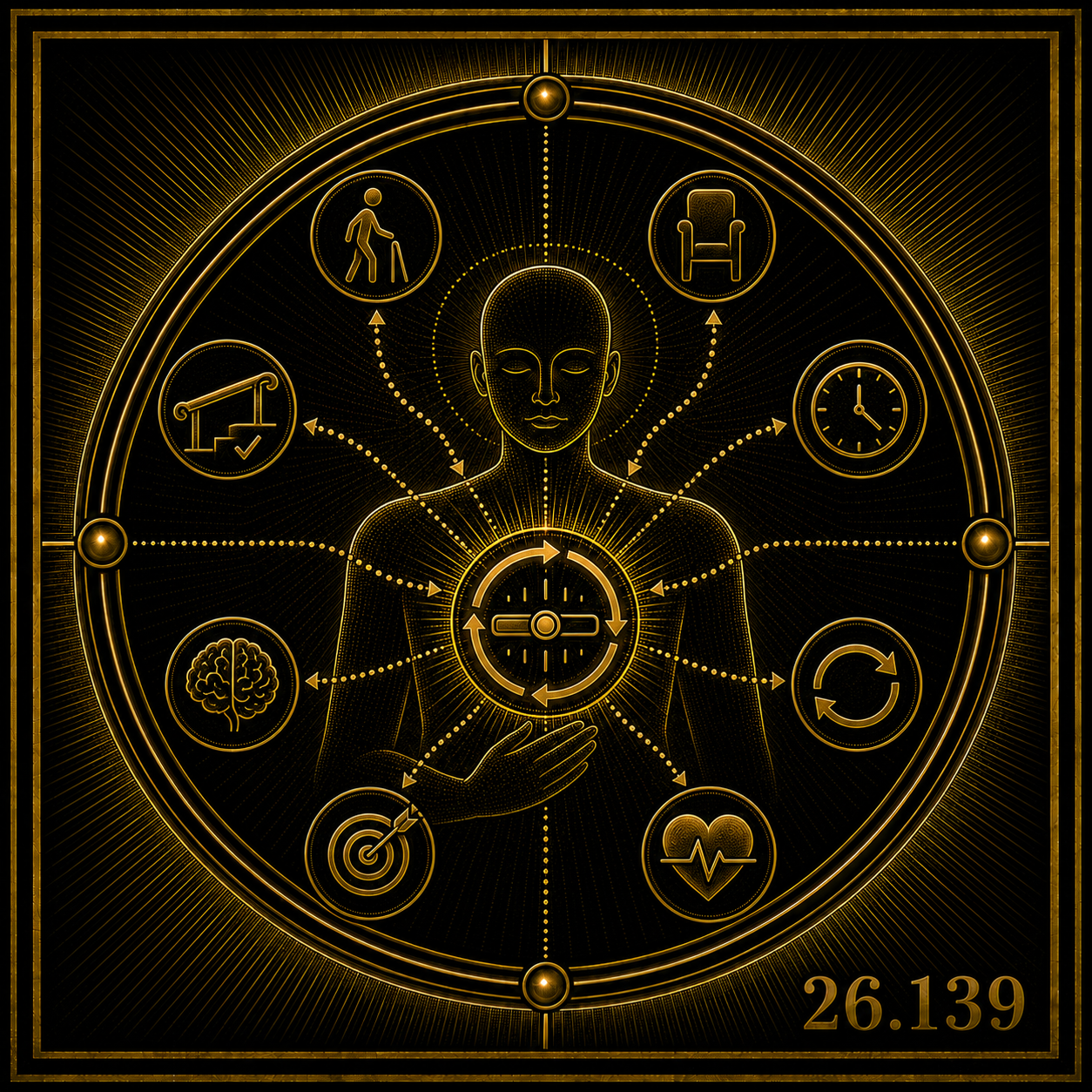
26.139 - Dignity in Decline
Dignity is not preserved by pretending capacity never changes. It is preserved through honest adaptation that keeps participation possible. This post explores how changing the method, pace, tool, standard, or recovery window can protect capability without becoming resignation, helping readers treat adjustment as stewardship rather than defeat or humiliation.

26.128 - Energy Budgeting
Energy often disappears before we understand where it went. This post reframes fatigue as information, helping readers see the hidden costs of ordinary commitments, cognitive load, emotional regulation, and recovery gaps. Energy budgeting begins not with doing less, but with making daily expenditure visible enough to allocate capacity wisely.

26.121 - Signal vs Story
Before the body becomes a story, it arrives as sensation. This post opens May by exploring how embodied stewardship begins with accurate interpretation, separating raw bodily signals from the meanings we attach too quickly, so discomfort can be met with steadiness, context, and proportion rather than panic, neglect, or self-judgment.
26.62 - When Nothing Changes, Something Still Does
Change does not require action to occur. Even when nothing appears to move, life continues shaping direction through unnoticed continuity. This post explores behavioral drift, default choices, and how small, repeated patterns quietly determine future outcomes, inviting readers to examine the trajectory created by what they allow to continue.
Unlock Deeper Understanding.
Elevate Your Perspective.
Join Lucivara and embark on a journey of insight, connection, and transformation. Sign up today to explore thought-provoking reflections, timeless wisdom, and practical ways to cultivate a more conscious and connected life.
Expand Your Mind – Gain deeper clarity on the Tenets of Lucivara.
Engage with Meaning – Access exclusive content designed to challenge and inspire.
Be Part of Something Bigger – Connect with a community of seekers and thinkers.
Your journey toward greater wisdom starts now.
🔹 Sign Up for Lucivara Today 🔹