

26.223 - What the Work Teaches Once You Enter It
Meaningful work rarely teaches through inspiration alone. Once entered, it reveals hidden demands, skill gaps, constraints, and standards that imagination could not anticipate. Purpose deepens when a person stops asking the work merely to express who they are and allows its discipline to shape who they are becoming over time.

26.222 - Feedback Is Not a Verdict
Feedback becomes dangerous when we ask it to define us. A response may contain useful information, personal preference, limited context, or projection. Learning requires neither obedience nor refusal. It asks us to separate identity from instruction, examine what is useful, and let feedback guide the next responsible action with care.
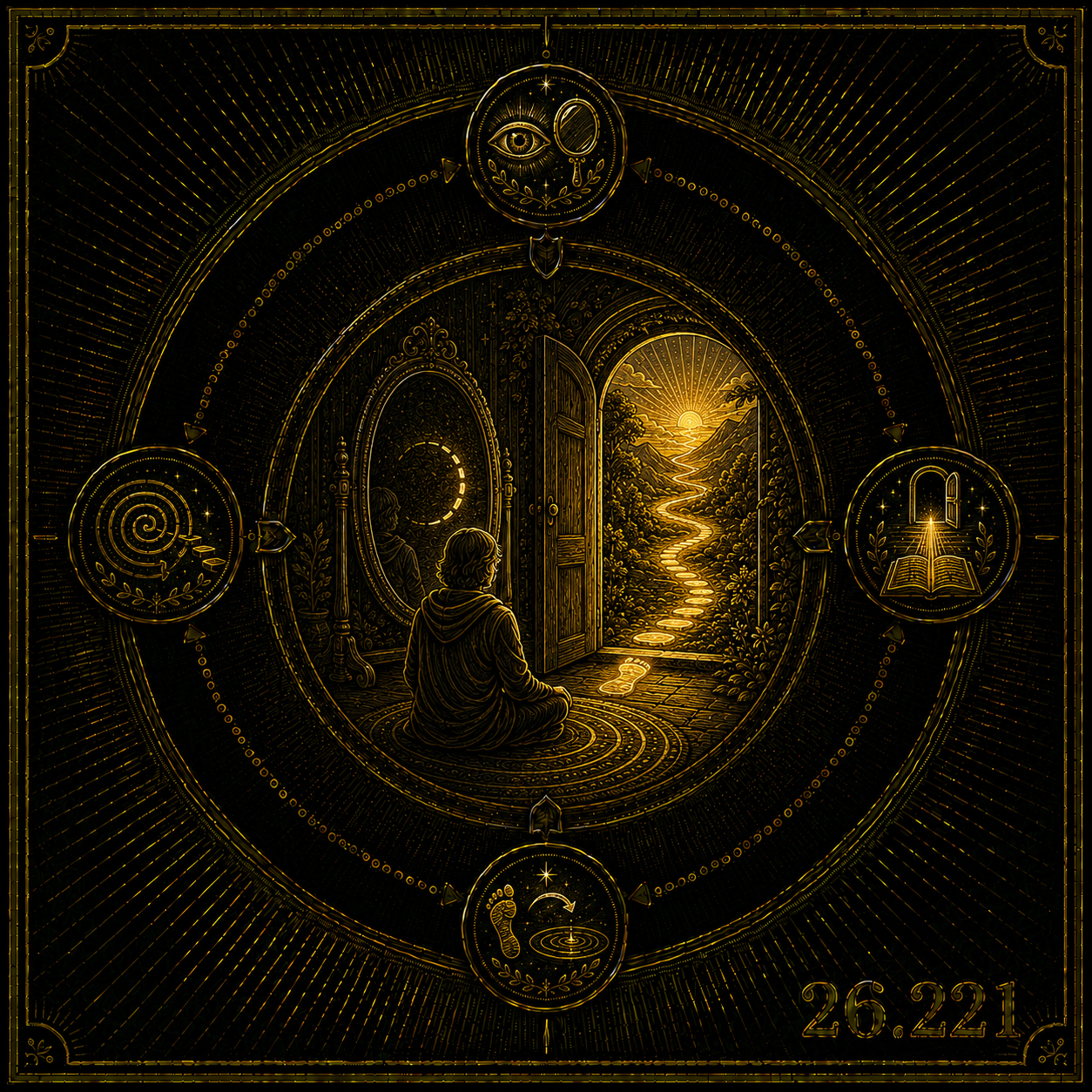
26.221 - Reflection Alone Cannot Carry the Whole Truth
Reflection helps us understand what experience has already revealed, but it cannot supply information that only participation can create. When thought begins circling familiar material, one responsible point of contact may restore movement. Action gives reflection fresh evidence, allowing uncertainty to become clearer without demanding complete certainty before we act.

26.220 - Motion Gives Purpose Something to Answer
Purpose becomes clearer through movement, not perfect preparation. Action places our intentions in contact with reality, revealing responses, constraints, surprises, and possibilities reflection alone cannot provide. The task is not simply to keep moving, but to notice what movement makes visible and let that new information shape the next step.

26.216 - The First Honest Step Is Usually Unimpressive
Purpose rarely begins with a dramatic entrance. It often starts as one private, unimpressive action: opening the file, washing the shoes, reading one page, or making the appointment. The first honest step matters because it interrupts avoidance and quietly begins a pattern that can become true through repetition over time.

26.205 - Making Room Is Also a Contribution
Belonging is not only built by what we express. It is also built by the space we protect, the attention we share, and the openings we create. Making room becomes a contribution when it helps quieter voices, careful thoughts, and overlooked people come forward with greater confidence and real presence.

26.203 - Not Every Moment Needs Your Full Self
Not every moment asks for complete self-display. Sometimes belonging matures through proportion: listening before speaking, noticing before performing, and making room before filling space. This reflection explores restraint as a confident form of presence, helping readers practice contribution that serves the room without disappearing from it or taking it over.

26.202 - Repair Does Not Require Everyone to Become Close
Repair does not always lead back to closeness. Sometimes the most mature repair creates clarity, accountability, boundaries, distance, or closure. This reflection challenges forced reunion and offers a practical repair outcome menu for discerning whether a rupture calls for reconnection, renegotiation, accountability, distance, or a clean and truthful ending now.

26.200 - Forgiveness Is Not the Same as Access
Forgiveness can release resentment without reopening unsafe access. This reflection separates inner release from restored contact, showing how compassion, accountability, boundaries, and trust each play distinct roles in repair. Healing does not require self-betrayal. A softer heart can still keep a wise door closed until safety has truly clearly changed.

26.196 - Misattunement Is Not Always Betrayal
This post clarifies that relational misattunement can hurt without automatically becoming betrayal. Through attachment theory, attunement research, and a practical classification exercise, readers learn to distinguish misunderstanding, neglect, boundary violation, pattern, and serious harm so they can respond with discernment instead of denial, escalation, or premature exile in communal life.

26.194 - The Courage to Be Corrected
Correction can feel like a threat when being right becomes part of how we prove we belong. This reflection explores why feedback stings, what learning research reveals about error, and how the courage to stay teachable turns correction into a doorway for trust, repair, and honest personal growth over time.

26.190 - The Maturity of Not Needing Immediate Agreement
Mature belonging does not require immediate agreement. This post explores why unresolved difference can feel threatening, how cultural speed turns uncertainty into performance, and why patience helps truth develop at human speed. Through research on dissonance, ambiguity, and humility, it offers a practice for pausing before forcing alignment too soon.

The Self You Bring Into the Room
True belonging begins when the steadier self enters shared spaces without disappearing. This July opening reflection explores the courage to remain honest, relational, and present under social pressure, offering a practical room inventory for noticing where approval has quietly replaced authenticity and choosing one small act of self-respecting presence today.

26.178 - Sustainable Does Not Mean Small
Sustainable ambition is not the same as settling. It is ambition disciplined enough to last. This post explores how pace, recovery, limits, and rhythm protect the work we care about most, helping readers separate devotion from self-destruction and redesign one important ambition so it can endure with clarity and strength.

26.177 | Planning for the Person Who Actually Lives Your Life
Realistic planning begins when we stop designing for an idealized future self and start honoring actual capacity. This reflection explores energy, emotional load, transition time, recovery, and honest design, showing how compassionate realism makes follow-through more sustainable, trustworthy, and aligned with the life we are actually living each day well.

26.176 - Designing Rhythms You Can Trust
Constant reinvention drains attention, energy, and self-trust. This post explores how steady rhythms support the nervous system, reduce friction, and make useful behavior easier to return to. By designing one small, repeatable pattern, readers can build continuity, protect presence, and create a quieter, more sustainable way of living each day.

26.175 - The Problem With Living on Intensity
Intensity can make weak systems look functional for a while, but the body eventually tells the truth. This post examines procrastination, pressure, stress arousal, burnout, and recovery debt, then invites readers to replace repeated emergency effort with a simple, sustainable structure that protects capacity over time and prevents avoidable collapse.

26.174: Margin Is Not Wasted Space
Margin is not wasted space. It is the protective room that keeps a life from collapsing under ordinary pressure. This post explores why recovery, transition time, stress buffering, and planning realism help us build schedules with enough space for resilience, steadiness, and humane design in the middle of real life today.

26.171 - The Work That Cannot Be Rushed
Some work cannot be rushed because excellence needs time to mature. This reflection examines how haste can preserve motion while weakening depth, and invites readers to identify meaningful projects that deserve a truer container of attention, patience, revision, and fidelity before they can become what they are meant to be.

26.169: When Fast Decisions Become Self-Abandonment
Speed can look like clarity, but it often hides the moment we leave ourselves behind. This reflection explores how fast decisions can become self-abandonment, why pausing restores inner authority, and how a personal pause rule helps protect time, body, relationships, money, integrity, dignity, and self-trust before answering under pressure again.
Unlock Deeper Understanding.
Elevate Your Perspective.
Join Lucivara and embark on a journey of insight, connection, and transformation. Sign up today to explore thought-provoking reflections, timeless wisdom, and practical ways to cultivate a more conscious and connected life.
Expand Your Mind – Gain deeper clarity on the Tenets of Lucivara.
Engage with Meaning – Access exclusive content designed to challenge and inspire.
Be Part of Something Bigger – Connect with a community of seekers and thinkers.
Your journey toward greater wisdom starts now.
🔹 Sign Up for Lucivara Today 🔹